AI native UI/UX design from a cross-domain product expert.

Production-grade interfaces for Australian property and finance — designed and shipped by one person directing an AI agent fleet. A team's output in weeks, not quarters, built to convert and survive compliance review.

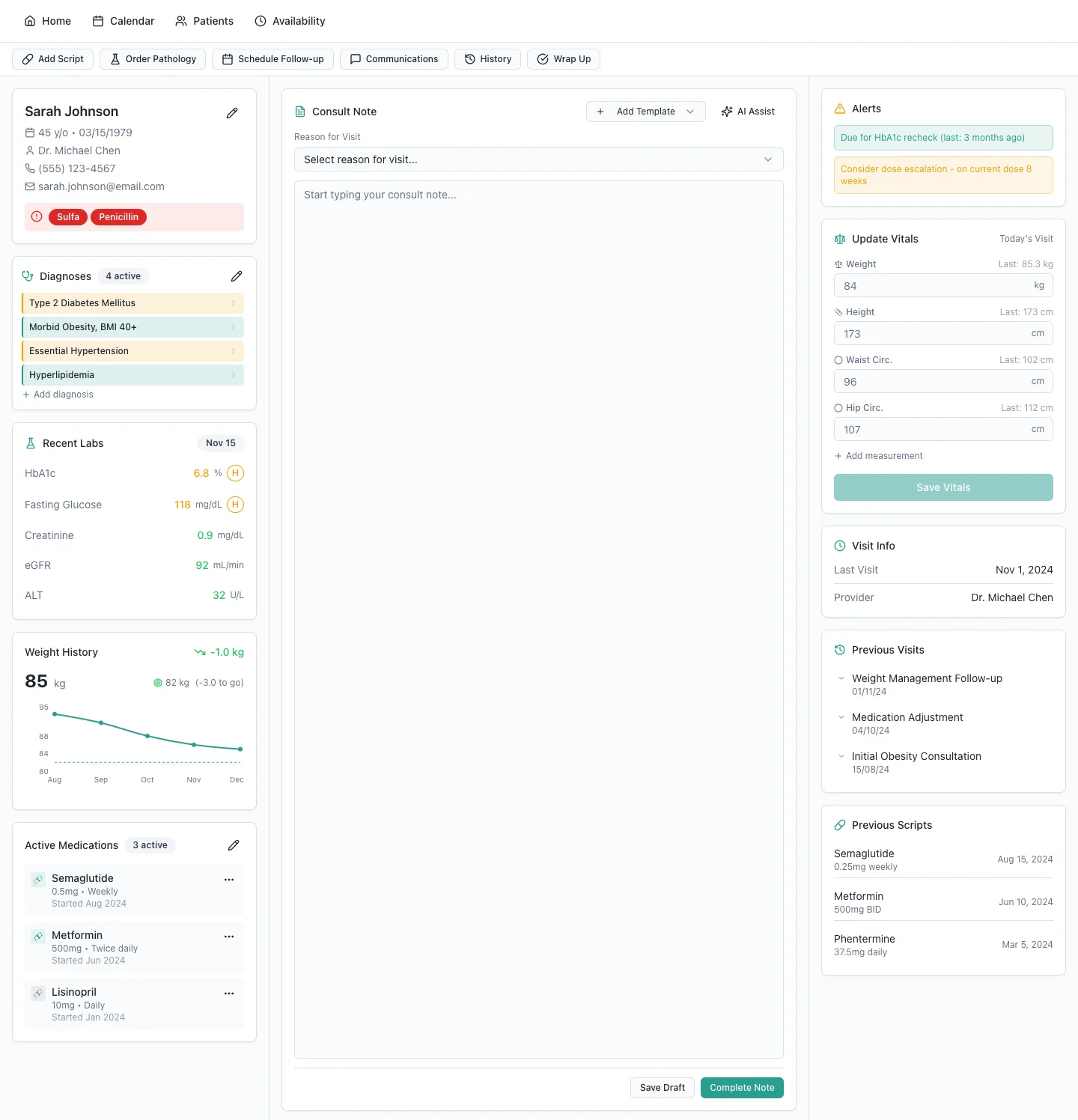
Clinician console showing a patient chart, flagged labs, alerts, vitals entry and an AI-assisted consult note editor
Clinician console — in use at a 100-person clinic
Stamp duty calculator result card showing itemised government fees
Stamp duty calculator

Selected work

Everything
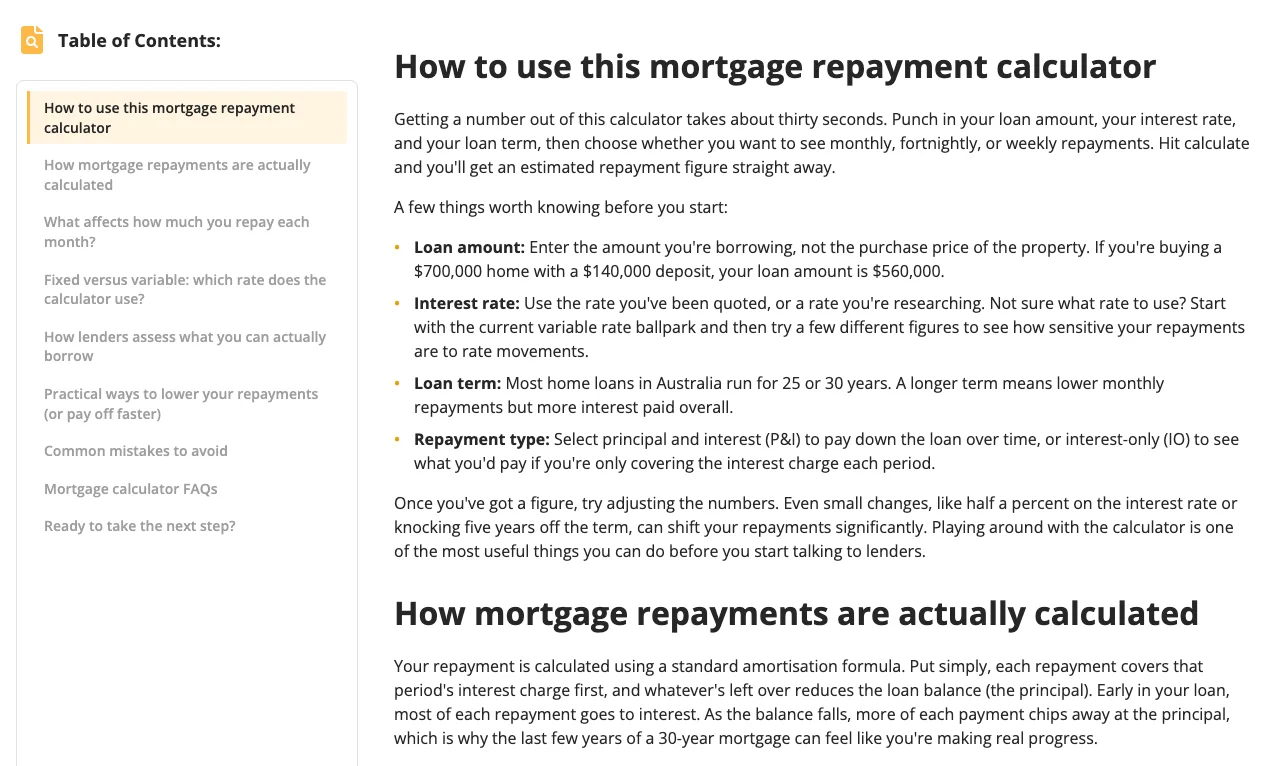
Stamp duty calculator result screen: 'Total Government Fees will be $17,432' with a line-item breakdown, beside a 'Get a Free Assessment' contact-details modal.

Mortgage Calculator Suite

Two embeddable calculators for a Brisbane mortgage brokerage — stamp duty and transfer costs, and borrowing capacity — built to end in a real number, not a lead form.

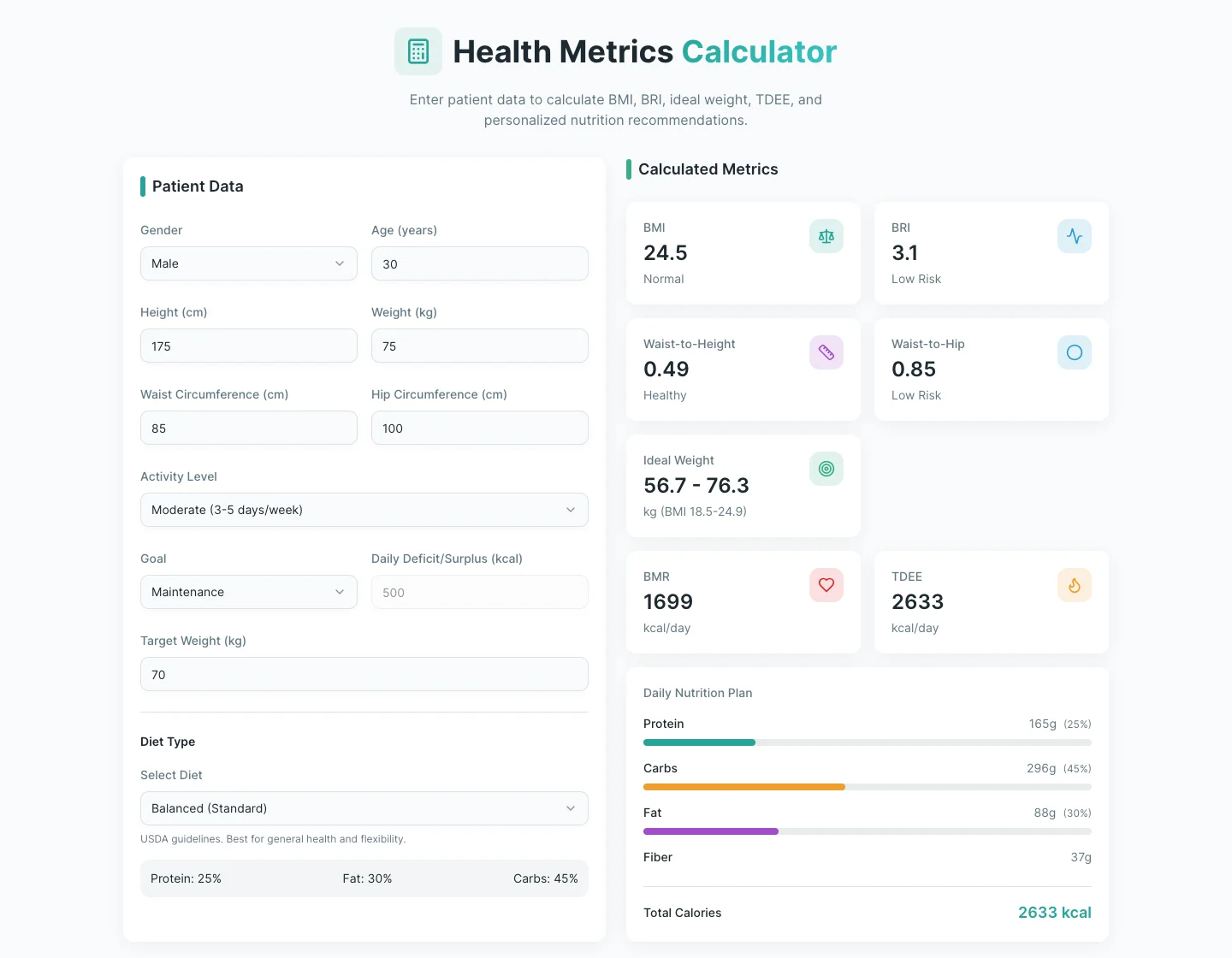
Clinician console showing a patient chart with diagnoses, recent labs, consult note editor with AI assist, alerts and vitals entry

Clinician Dashboard

Clinician-facing screens for a telehealth weight clinic — consult notes with AI assist, labs, vitals, alerts, and a metabolic calculator suite — integrated into a 100-person clinic's Salesforce workflow.

A fictional demonstration slide for 'Meridian Fiberworks': the headline 'Compostable in your backyard. Priced like plastic.' beside two stat cards reading '90 days' home-compostable breakdown and '$0.01' per-unit cost gap to incumbent polystyrene.

Pitch Deck Design

Investor deck design and narrative structure, demonstrated here with a purpose-built fictional example — the real client engagement is under a signed NDA.

The Holistic Care Clinic homepage hero: 'Personalised, integrated healthcare tailored to you' set in a serif/italic mix on a cream background.

The Holistic Care Clinic

A telehealth clinic marketing site built to read as a sanctuary, not a booking form — serif type, cream palette, one clear path to an appointment.

Agents write the code, I gate the product

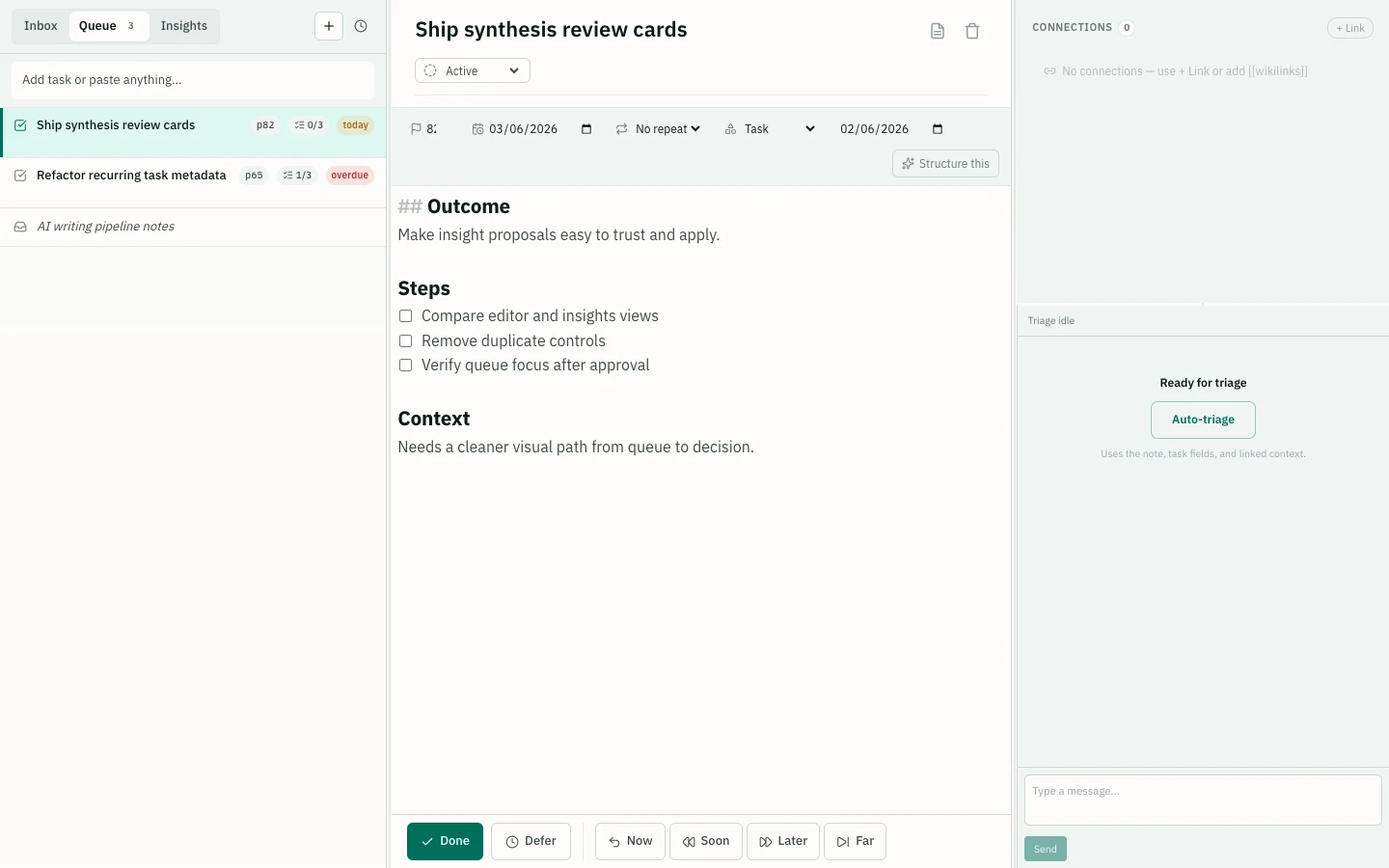
I used to run a LeSS framework across 24 developers. Now, I apply the exact same management discipline to a multi-agent AI fleet—except our scrum meetings happen every two hours.

I maintain an architecture across Claude Code, ChatGPT, and Z.ai. They don't just generate code; one model is forced to cross-check the other. They run multiple adversarial passes until they reach a strict consensus on the solution.

They operate inside a constrained framework protected by pre- and post-hooks, strict permissions, and a defense-in-depth approach built specifically to kill AI-slop.

I dictate the outcome. They write the syntax. I gate what ships.

How I build
The outcome I dictate goes to Claude Code, ChatGPT and Z.ai, which cross-check each other to consensus; hooks and permissions gate what shipsOutcomeClaude CodeChatGPTZ.aiConsensusGatehooks · permissionsShipThe outcome I dictate goes to Claude Code, ChatGPT and Z.ai, which cross-check each other to consensus; hooks and permissions gate what shipsOutcomeClaude CodeChatGPTZ.aiConsensusGatehooks · permissionsShip

How did I get here?

I've built a career on pursuing interesting problems.

  1. 2008–2015

    Veterinary Surgeon

    Seven years of surgical trial by fire.

    The full story

    Most people hear "vet" and think puppies. The reality is high-stakes system repair on patients that can't talk. A standard week meant executing routine surgeries in 12 minutes flat, doing complex airway reconstructions on pugs, pregnancy-testing 500 cows, and rebuilding a show pony's crushed ear canal so well it won its next event. When others hesitated, I cut. The habit that transfers? I know how to diagnose the root cause of a failing system under extreme pressure, and I don't flinch when things get messy.

  2. 2015–2019

    Sales to Operations Manager

    I had intentionally made myself redundant, so I walked away.

    The full story

    It started on a vet sabbatical, writing an email sequence from a hammock in Tuscany that pulled $60k in two months from an unmonetized list. I joined a friend's startup in sales. To hit volume, I built an outbound team in the Philippines, flew out for two weeks, and acted as their proxy—personally answering every single email they generated to force the deals over the line. We signed 600 partner locations in six months. When I told them the product was weak, they moved me to Vietnam to fix it.

    We got acquired, and the new parent company's offshore management had 20 developers floundering in a cargo-cult Agile mess. Meanwhile, my team was a SCRUM machine relentlessly shipping high-quality product. They called me in to ask what the difference was. I told them exactly how I operate. Their product leader said it wouldn't work. I asked for two weeks to prove him wrong, and enforced strict, no-nonsense SCRUM across the board. Two weeks later the system was singing — and I didn't take the role so much as absorb it, because the processes I'd built were self-sustaining underneath me. When budgets tightened, I cut my own hours by 75% to save developers from layoffs. The system ran flawlessly without me. I had intentionally made myself redundant, so I walked away.

  3. 2019–now

    The "Every Funded Problem" Fixer

    The person founders called when they had a problem and a budget.

    The full story

    I quit operations in 2019 and became the person founders called when they had a problem and a budget. I'd been moonlighting pitch decks since 2017, building a referral-only network that raised over $32M across venture funds and multi-million-dollar US real estate offerings. I didn't stick to one lane. I built sites and SEO engines for sustainable container companies. For a major mortgage broker, I architected the automations, lead-nurture workflows, and conversion mechanisms that actually captured their pipeline — for a while as their fractional "Chief Innovation Officer." It didn't matter what the domain was—I just figured out the thesis, designed the solution, and made it work.

  4. 2025–now

    The AI Pivot

    In a single day, I can build what used to take a month.

    The full story

    I've always had a fundamental intolerance for grunt work. If a task didn't directly drive the outcome, I wanted no part of it. I started messing with AI early—running original diffusion models in Jupyter notebooks and testing GPT-2.5. From GPT-3 onwards, my approach shifted entirely from manual implementation to human-gated outputs. But early 2025 was a wall; no matter what meta-harness you built, getting models to execute complex, multi-step tasks was near-impossible.

    By December 2025, the dam broke—literally. I coached Claude and GPT to build a 4km erosion simulator where overflowing water created the sedimentary flow and velocity required to destroy a gold mining berm. We took it from a 2D falling-sand sim, to a 2D FLIP model, to a 3D WebGL Rust shader running both micro (sluice) and macro (world) simulations based on actual physics, not predetermined animations. The agents and I brute-forced our way through every known mix of fluid-and-sediment simulation available. I didn't know the code. I just knew the physics I wanted and how to direct the models to build it.

    But it didn't stop there. While building the sluice, I tried to force existing AI orchestration tools to work. I leaned hard into Gastown (Steve Yegge). Valiantly tried and failed to make it useful. Then OpenClaw. Valiantly tried and failed to make it useful. Then I built my own Temporal-backed orchestration layer on my VPS. That didn't achieve the final result either. But every single failure taught me exactly where and why the models break.

    Now, I run cross-agent teams driven by human-readable task lists and ruthless git hygiene. The end result: in a single day, I can build what used to take a month.

Read the resume

Open to a role, or a project.

If you want a wallflower, hire one. If you want the outcome: the resume is the short version, the engagements are priced.